Drain services
Kitchen sink clogs
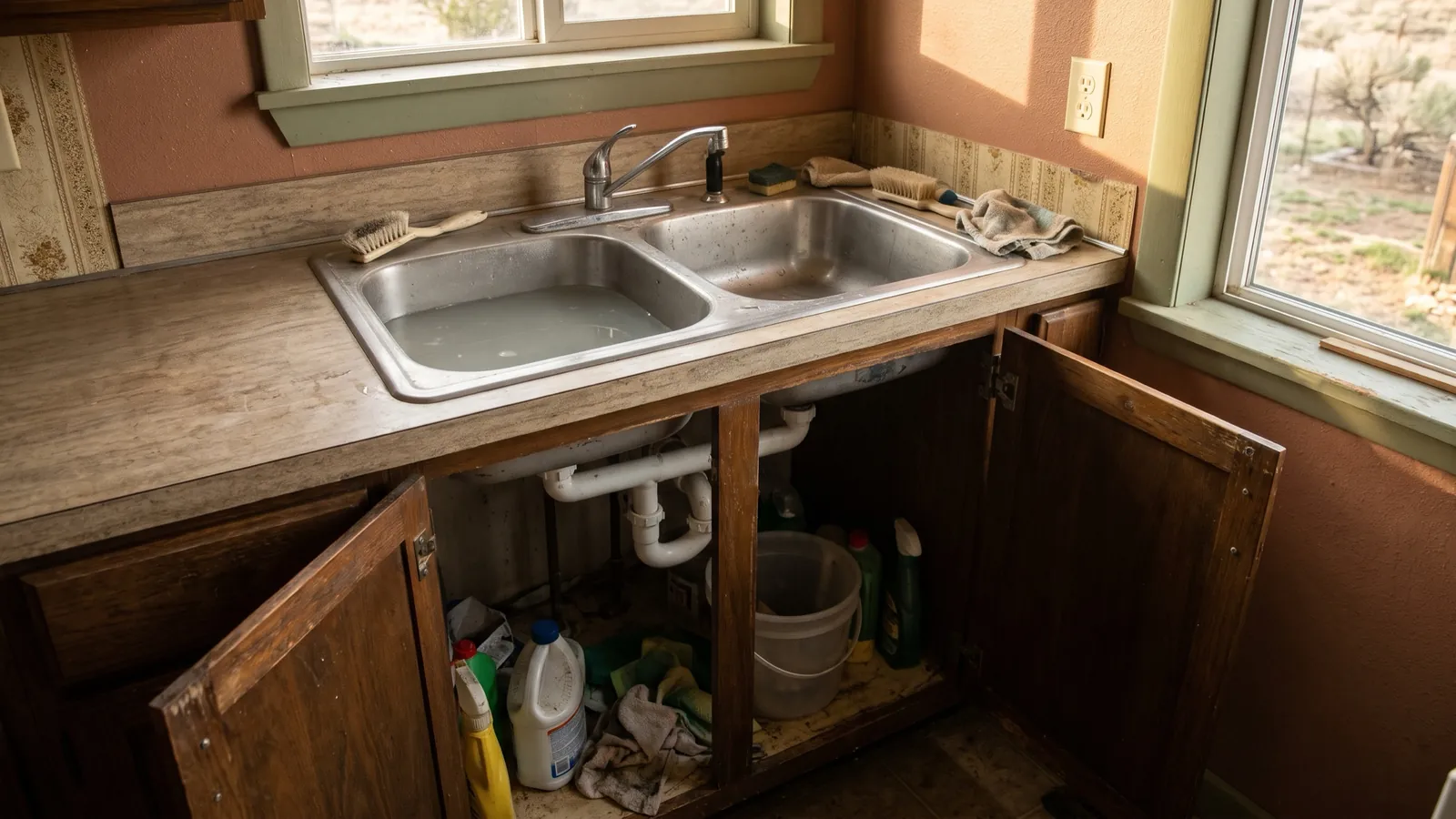
A kitchen sink that holds water, or empties one bowl into the other, is almost always blocked within a few feet of the trap, inside the wall. Cooking fat is the usual start of it.
How a kitchen drain closes up
Bacon fat and pan drippings go down warm and runny. Once they reach pipe that sits against a cool outside wall they firm up and stick, and every rinse of rice, pasta water or coffee grounds adds a layer. The opening shrinks over months until one big wash-up finishes it off.
A garbage disposal chops food into smaller pieces, but the pieces still have to travel the whole length of the pipe. Potato peel, eggshell grit and fibrous scraps such as celery settle in the low spots. The city lists grease among the main causes of sewer blockages it sees.
Before anyone comes
- Stop the dishwasher. It empties into the same pipe and will push water into the sink.
- Bail the standing water into a bucket so the trap can be opened without a flood.
- Clear out the sink cabinet; whoever comes needs to reach the trap and the wall pipe.
- Skip the drain opener from the store. Water full of lye splashes out when the trap comes off. Why chemical openers cause trouble.
- Notice whether the other bowl fills, and whether anything else in the house is slow.
What clearing it usually involves
The trap comes off first, because sometimes that is where the blockage is. If not, a small hand-cranked or electric cable goes through the trap arm into the wall pipe and on toward the main. In older houses with long runs of grease-lined pipe some companies jet the kitchen branch instead, which washes the walls rather than just poking a hole.
If the kitchen backs up only when the washer drains, or when a toilet flushes, the blockage is further along in shared pipe, and the main sewer line page is the one to read.
Kitchen drain questions
Should I stop using the disposal?
Not entirely, but scrape plates into the trash first and run plenty of cold water while it grinds so the bits keep moving.
Why does the clog come back a few weeks later?
A cable often opens a channel through grease without removing what lines the pipe. Ask whether jetting the branch makes sense for your house.
Where should cooking grease go?
Let it cool in a can or jar and put it in the trash. Wipe greasy pans with a paper towel before washing them.
Still weighing it up?
Find out whether they'd go in through a cleanout or a fixture, whether the price is per job or per hour, and if the camera costs extra. Ending the conversation commits you to nothing.
Water still standing somewhere?
Say which fixtures misbehave, what you poured or plunged already, and whether sewage surfaced. A valley plumbing business picks up, and the choices stay yours.
Call (970) 644-6846The conversation can be recorded. Money flows as set out in the referral disclosure; data use is in our privacy notes.